Get in front of ready-to-act prospects.
Then make the click worth it.
Google Ads can put you in front of people already searching for help. We connect high-intent search campaigns to focused landing pages, strong messaging, call tracking, and conversion paths so paid traffic has a better chance to become real leads.
Pointing ad traffic to your existing homepage is not enough. We think through intent, geography, offer, form leads, budget, and ongoing testing.
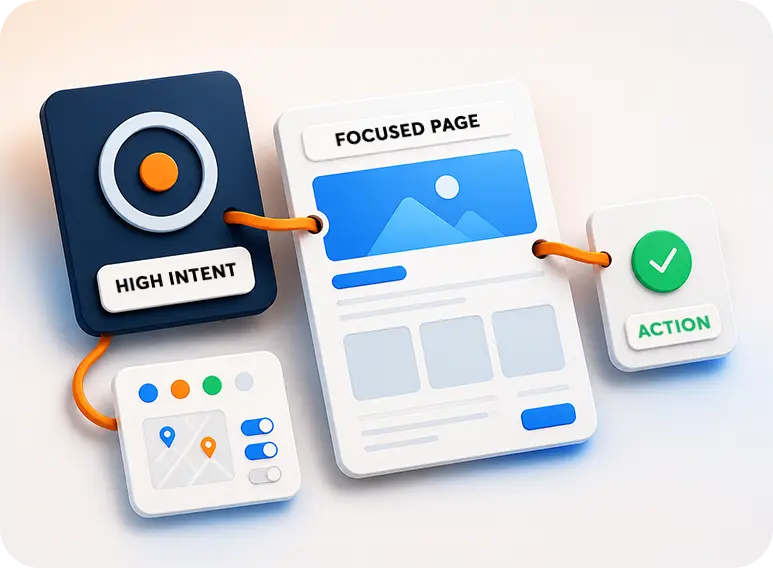
Most PPC starts with keywords. We start with what a good lead looks like.
A click is only valuable when it moves the right person closer to taking action. We plan campaigns around search intent, service fit, geography, landing page experience, call quality, form leads, and the information needed to improve over time.

Target the Right Intent
We focus on searches that suggest someone is actively looking, comparing, or ready to take the next step.

Build the Conversion Path
The ad, landing page, offer, form, and phone call should all feel connected instead of sending people into a generic website.
Track What Matters
Clicks, calls, forms, locations, campaigns, and landing page behavior should help us understand what is actually working.
Paid search works best when it is matched to the moment.
Google Ads is especially useful when people are already searching with intent. The opportunity is to get in front of them, speak clearly, and remove friction from the next step.
Urgency
Capture Ready Demand
Reach people searching for immediate help, pricing, estimates, repairs, services, or specific products.
Markets
Expand Target Areas
Focus campaigns around the cities, regions, or service areas where you want more opportunities.
Testing
Learn Faster
Use paid traffic to test offers, calls to action, and audience intent before waiting on organic growth.
Support
Fill SEO Gaps
Get visibility for high-value searches while longer-term SEO work continues building in the background.
Lead Quality
Filter the Fit
Use keywords, geography, ad copy, and landing page language to attract better-fit prospects.
Landing Pages
Focus the Message
Send traffic to pages built around one service, one market, and one clear next step.
Phone Calls
Track Call Activity
Understand which campaigns are producing phone conversations, not just clicks.
Reporting
Improve Over Time
Use conversion data, search terms, testing, and account structure to keep tightening the campaign.
Paid campaigns perform better when every piece supports the same goal.
The best Google Ads campaigns are not just ads. They are a coordinated system of targeting, messaging, landing pages, tracking, budget control, testing, and refinement.
Targeting
Search Campaigns
Structure campaigns around high-intent searches, service categories, locations, and priority opportunities.
Message
Ad Copy
Write ads around urgency, proof, service fit, benefits, and the reason someone should choose you.
Conversion
Landing Pages
Build focused pages that match the ad and guide visitors toward calls, forms, booking, or quotes.
Calls
Call Tracking
Track phone leads so you can understand which campaigns and searches are creating conversations.
Location
Geo-Targeting
Control where ads show and prioritize the markets that make the most sense for the business.
Budget
Spend Control
Align budget with goals, market size, competition, and the level of opportunity available.
Testing
Ongoing Experiments
Test search terms, headlines, landing pages, calls to action, forms, and conversion paths.
Reporting
Readable Results
Review conversions, call activity, spend, search terms, and opportunities to improve.
Do not pay for clicks and send people somewhere confusing.
When someone clicks an ad, the next page should immediately confirm they are in the right place. That means the headline, proof, service details, form, phone number, and call to action all need to support the same promise.
Search Intent
Start with what the person is likely trying to solve.
Ad Message
Connect the search to a clear promise or reason to click.
Landing Page
Match the ad and guide the visitor toward one focused next step.
Lead Capture
Use calls, forms, booking, or quote requests to turn intent into action.
Tracking
Measure what happened so the campaign can keep improving.
A practical path from account strategy to ongoing improvement.
PPC should be structured enough to launch confidently and flexible enough to improve as data comes in.
01
Define the Lead
Clarify what counts as a valuable call, form, booking, or quote request.
02
Map Search Intent
Group searches by service, location, urgency, and buyer stage.
03
Build the Path
Create or recommend pages that match the ad and support conversion.
04
Install Tracking
Set up call tracking, form tracking, conversion goals, and reporting signals.
05
Launch & Monitor
Start the campaign with a clear structure, controlled spend, and review points.
06
Refine
Use data to adjust search terms, budgets, ads, landing pages, and targeting.
Google Ads can work even better when it is part of the right mix.
Sometimes Google Search Ads is the primary channel. Sometimes it’s best to focus on Local Services Ads, Bing Ads, retargeting, or social campaigns. Because Top Jump is full-service, we can help choose the best mix instead of forcing every business into one tactic.
Search + Landing Pages
Focused Conversion Paths
Pair high-intent searches with pages built specifically around the service, offer, or urgency.
Search + SEO
Short & Long-Term Growth
Use paid search to create near-term visibility while SEO builds durable opportunities over time.
Search + Retargeting
Reconnect Interested Visitors
Reconnect with visitors who clicked, explored, or showed interest but did not take the next step.
Search + Local Services
Expand Local Visibility
For qualifying businesses, Local Services Ads boost inquiries alongside search campaigns.
Search + Bing
Reach Additional Audiences
Bing Ads can be considered when the audience, budget, and opportunity make sense.
Search + Social
Support the Customer Journey
Social ads can warm up audiences, tell the story, and create awareness before someone searches.
Ask for context, not just screenshots.
Paid ads can look impressive on a dashboard and still miss the business goal. We prefer to talk through what was targeted, how the landing path worked, what was tracked, and what kind of leads the campaign was built to create.
Campaign Context
Understand the goal, targeting, budget, market, and conversion path.
Tracking Signals
Review what was measured, including calls, forms, and landing page activity.
Improvement Path
See how data can shape refinements to ads, pages, budgets, and targeting.
Paid search decisions are easier when expectations are clear.
These quick answers help explain how we think about leads, landing pages, budgets, ad spend, and realistic expectations.
Do you guarantee leads or sales?
No. We cannot guarantee leads or sales because results depend on your market, competition, offer, budget, landing pages, and other factors. Our focus is on building and continually improving campaigns that maximize the opportunity for success.
Is ad spend included in management?
No. Your advertising budget is paid directly to the advertising platform. Our management fee covers campaign strategy, setup, optimization, reporting, and ongoing improvements.
Do I need a landing page?
In many cases, yes. Dedicated landing pages usually perform better than sending visitors to a generic homepage because they match the ad message and guide users toward one clear action.
How quickly can Google Ads start working?
Campaigns can begin generating traffic soon after launch, but meaningful optimization takes time. We use real campaign data to refine keywords, ads, targeting, and landing pages.
Can you manage Local Services Ads or Bing Ads too?
Yes. We can help manage Google Local Services Ads, Microsoft Bing Ads, and recommend the right mix based on your business, audience, and goals.
Can paid ads work with SEO?
Absolutely. Paid search can generate immediate visibility while SEO builds long-term organic growth. Together they often create a stronger overall marketing strategy.
Not sure which service you need?
Use the green “Ask me Anything” button in the corner to get campaign ideas, strategy guidance or answers about our business instantly. Our AI assistant is not a replacement for a real strategy conversation, but it might surprise you.